
Carbon Gravel Frames: Comparison, Prices and Weights (2026)
22 November 2026
It often happens (every weekend, in fact) that a road cyclist spots a dirt track and thinks: “What if I went to see where it leads?” A few rides later, they've discovered the joys of gravel riding: tracks where even Google Maps gets confused, coffee stops in the middle of nowhere… and the look on their partner's face when they see the state of the bathroom after the ride.
If you're here, it's because you've caught the bug and are looking for the right frame to go with it. I've brought together 9 carbon gravel frames from Asian brands on this page, ranging from €503 to €1,999. For each one, you'll find the price, weight and standards to check before buying: bottom bracket, axles, seatpost and fork steerer tube. And if you're still undecided between road and gravel, my comparison of all carbon frames and my carbon road frames page are here to help.
Some links on this page are affiliate links: if you buy through them, I earn a small commission at no extra cost to you. It doesn't affect my opinion, but it helps pay for the hosting… and the bike cleaner.

9 produits Aucun produit ne correspond à ces critères. 
Tantan/Seraph GR201
+ 1 caractéristique

Tantan/Seraph GR208
+ 1 caractéristique

ICAN Graro
+ 1 caractéristique

BXT gravel 135 + cintre (handlebar)
+ 1 caractéristique

Elves Bike Mori aerox
+ 1 caractéristique

BXT GRAVEL
+ 1 caractéristique

Winspace G3
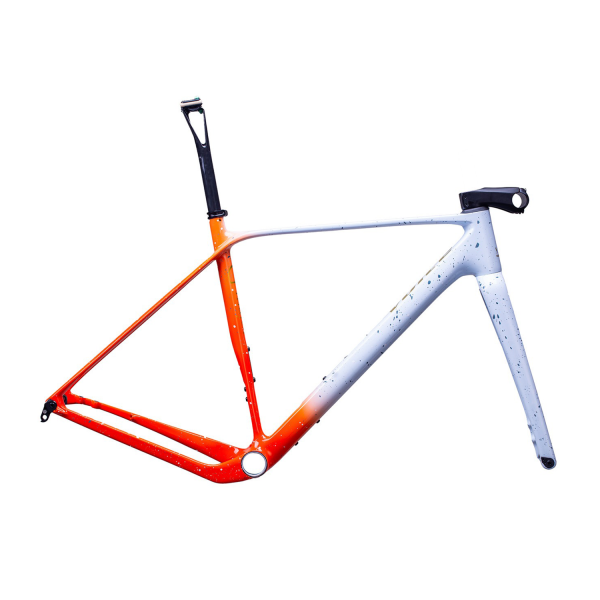
VoiceVelo VFV G-Major Gravel
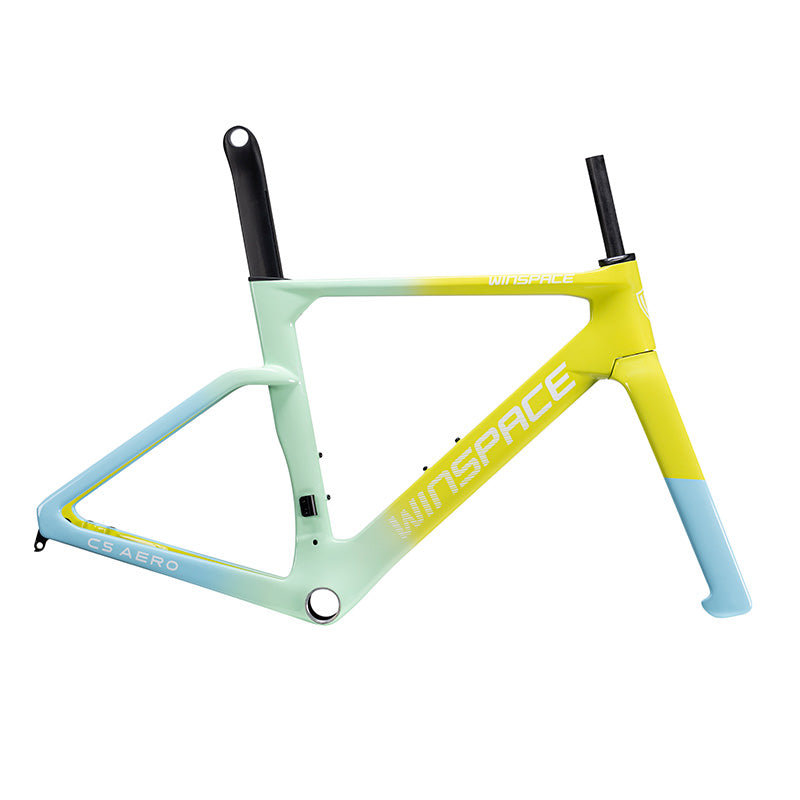
Winspace C5 Aero
How I selected these gravel frames
I use the same method as for the general comparison: prices checked on the date of the latest update, weights provided by the manufacturer, and only frames with disc brakes and thru-axles that can be delivered to France. For gravel, I add one criterion that matters enormously: tyre clearance. A gravel frame that only accepts 35 mm tyres is a bit like a 4x4 with no ground clearance: it looks the part, but that's about it!
Gravel frame or road frame: what's the difference?
On paper, a gravel frame looks very similar to a road frame. In practice, several details make all the difference:
- Tyres: a gravel frame accommodates much wider tyres, often 40 to 50 mm. According to the seller's specifications, the Seraph GR201 and GR208, for example, are rated for tyres up to 700 × 50 mm. Road frames generally top out at around 32 to 35 mm.
- La géométrie : angle de direction plus ouvert, empattement plus long, boîtier de pédalier plus bas. Résultat : le vélo est plus stable dans les descentes caillouteuses, mais un peu moins vif en danseuse.
- Mounting points: extra bottle cage mounts, inserts for bikepacking bags, mudguards or racks. Useful if you're tempted by a bit of adventure!
- Weight: more material and sturdier tubes mean a slightly heavier frame. In this comparison, gravel framesets weigh between 1.50 and 1.94 kg, compared with 1.42 kg for the lightest road frame.
I've written a complete guide to gravel bike geometry if you'd like to find out more.
How to choose a carbon gravel frame
Before hitting the buy button, you need to ask yourself the right question: where are you going to ride? A frame designed for fast gravel racing will have very little in common with one intended for three-day bikepacking trips. Then, just as with a road frame, make a list of the components you'll be keeping (groupset, wheels, handlebars) and those you'll need to buy.
Tyre clearance: the number one criterion
This is THE first thing to check. The more clearance you have, the wider the tyres you can fit for rough tracks, mud or sand. My advice: don't aim to match the stated maximum tyre width exactly. Leave a few millimetres of clearance, especially if you ride in wet regions. A 45 mm tyre in a frame that accepts up to 50 mm is a sure-fire way to avoid turning your frame into a mud grinder.
Some frames also accommodate smaller 650b wheels with wider tyres: the overall wheel diameter remains close to that of a 700c wheel. This is very comfortable on particularly rough terrain, but make sure you check the compatibility specified by the manufacturer.
Seatpost: 27.2 or 31.6 mm?
The good news is that proprietary seatposts are much rarer on gravel bikes than on road bikes. In this comparison, most frames use a standard 27.2 mm round seatpost. This is a great choice for comfort, as a narrower seatpost flexes slightly and filters out vibrations. The Seraph GR208, on the other hand, uses a 31.6 mm seatpost. This is worth considering if you want a dropper seatpost, as there is a wider choice of models with more travel available in this diameter. If technical descents make you nervous, that's a real advantage!
Bottom bracket: finally, some good news
All the gravel frames in this comparison have threaded bottom brackets: T47 on almost all of them, and BSA68 on the BXT Gravel 135. For a bike that's going to encounter water, mud and dust, this is excellent news. A press-fit bottom bracket in the mud is practically guaranteed to start creaking after a few rides. And at that point, it's not adventure calling – it's your mechanic.
Drivetrain: 1x or 2x?
In gravel riding, many cyclists switch to a 1x drivetrain. It's simpler, lighter, and means fewer things to adjust and get dirty. A 2x drivetrain still has the advantage of closer gear ratios, which is very useful if you also do a lot of road riding. All the frames in this comparison support mechanical or electronic shifting, but check that they're compatible with a front derailleur if you want to stick with a 2x setup.
If you're considering the latest SRAM gravel drivetrains, whose rear derailleur mounts directly to the axle, you'll need a frame with a UDH hanger. The Seraph GR201 and GR208 specify that they have one.
Mounting points: for the adventurous
Dreaming of bikepacking and nights under the stars? Check the mounting points: a third bottle cage mount under the downtube, top tube mounts for a frame bag, fork mounts, mudguard mounts… On a race frame, these are often kept to a minimum. On an adventure frame, they make all the difference!
Wheels and axles
All the gravel frames in this comparison use 12 × 100 mm front and 12 × 142 mm rear thru-axles, just like road bikes. This means you can use the same wheelset on both a road bike and a gravel bike. Handy if you want one set of wheels for off-road riding and another for the road. When it comes to wheels, take a look at my wheel comparison: the Elitewheels Gravel Aero+ and Winspace Grapid are designed for exactly this.
Gravel racing, adventure or all-rounder: which type of rider are you?
Le gravel course. Vous voulez aller vite, accrocher un dossard sur une épreuve gravel, ou simplement mettre une mine à vos copains sur les chemins blancs. Vous chercherez un cadre léger, rigide, parfois aéro, avec une géométrie plus agressive et des pneus autour de 40 mm. Dans le comparatif : l'Elves Mori aerox, le VoiceVelo G-Major.
Adventure gravel. You head out for the day, or even for several days, with bikepacking bags. You'll be looking for generous tyre clearance, plenty of mounting points and comfortable geometry. In this comparison: the Seraph GR201 and GR208 (700 × 50, UDH).
The all-rounder. You only have one bike and want it to do everything: road rides on Saturdays, gravel tracks on Sundays. A not-too-specialised gravel frame with two wheelsets is ideal. In this comparison: the BXT Gravel (road/gravel) or the ICAN Graro. I've also written a guide to riding a gravel bike on the road.
Still not sure which type suits you? My guide, Which Gravel Bike Do You Really Need?, should help you decide.
How much should a carbon gravel frame weigh?
However, you shouldn't choose your gravel frame based on this criterion alone. Even less so than with a road bike! Off-road, your tyres, bikepacking bags and water bottles weigh far more than the 200 g you might save on the frame. In this comparison, gravel framesets weigh between 1.50 kg (VoiceVelo G-Major) and 1.94 kg (Seraph GR201 and GR208). The BXT Gravel 135 comes in at 2.15 kg, but that includes the handlebars.
My take: for leisure or adventure riding, a frame weighing around 1.8 to 1.9 kg (including the fork) will do the job perfectly well. Frames under 1.6 kg will mainly appeal to racers. And if you really want to save weight, there are often easier places to shed a few grams… I won't mention the pizza parlour, but you get the idea.
To compare carbon with other frame materials, read my guide: Which Material Should You Choose for a Gravel Bike?
What budget do you need for a gravel bike built around a Chinese frame?
The frame is only part of the bill! You also need to factor in the groupset, wheels, cockpit, tyres, saddle… and any customs charges if the frame is shipped from China. Starting with a €500 frame, you can build a complete carbon gravel bike for €1,800 if you choose your components carefully.
To help you, I've written several guides:
- How Much Should You Budget for a Gravel Bike?
- A €1,000 Gravel Bike
- Which Gravel Bike Should You Choose for €2,500?
For everything concerning the reliability of Chinese frames, customs and proprietary parts, you'll find all the information on the main carbon frames page.
FAQ: your questions about carbon gravel frames
What tyre clearance should a gravel frame have?
For all-round riding, look for a frame that can accommodate at least 45 mm tyres. For adventure riding and rough terrain, aim for 50 mm or more. Always leave a few millimetres of clearance for mud.
Can you ride on the road with a gravel frame?
Yes, and that's one of its biggest advantages. With a second wheelset fitted with road tyres, your gravel bike becomes a very capable endurance bike. Find out more in my guide: Riding a Gravel Bike on the Road.
How much does a carbon gravel frame weigh?
In this comparison, between 1.50 and 1.94 kg including the fork. That's slightly more than a road frame, due to the increased tyre clearance and additional reinforcements.
27.2 or 31.6 mm seatpost?
A 27.2 mm seatpost offers greater comfort. A 31.6 mm seatpost gives you more choice when it comes to dropper posts. Choose according to the terrain you ride!
Can you fit a road groupset to a gravel frame?
Yes, provided the frame supports a front derailleur for a 2x setup. Just check the gear ratios: for gravel riding, lower gearing is often preferable for steep climbs on rough tracks.
Can a gravel frame accommodate 650b wheels?
Some can, others can't. Check the frame specifications provided by the manufacturer before buying your wheels.
What gravel frame size should I choose?
Compare the stack and reach with those of your current bike rather than relying on S, M or L labels. Everything is explained in my guide: What Bike Size Should You Choose?
 Français
 English